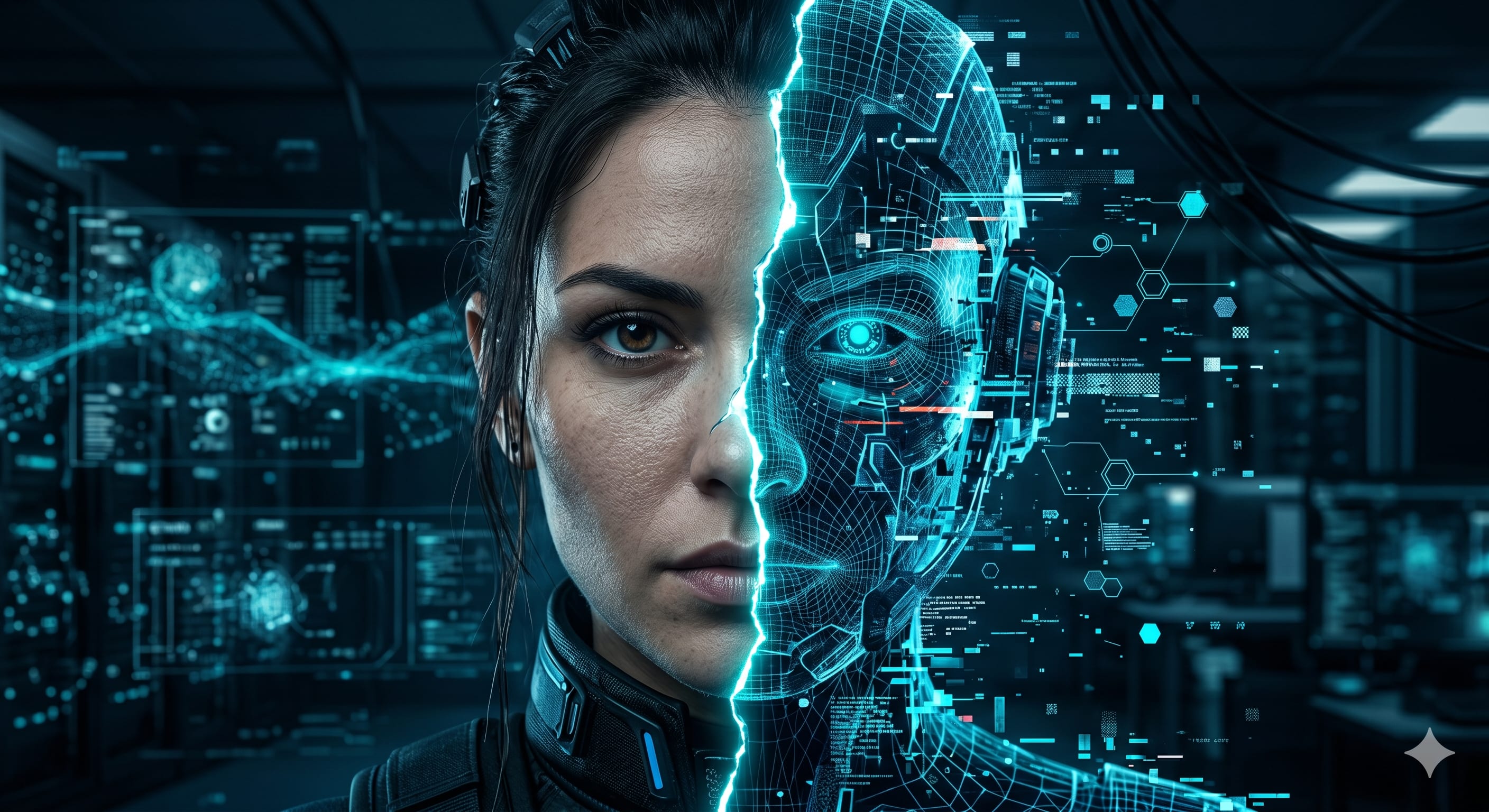
A few years ago, deepfakes were a novelty — viral videos of celebrities saying things they never said, passed around for laughs. Today, they're something far more serious.
In 2025, deepfake technology has matured to a point where a realistic video of your CEO can be fabricated in minutes. A synthetic voice clone of your CFO can authorize a fraudulent wire transfer. A fake identity can pass through a digital KYC check without raising a single flag.
For businesses and startups navigating the digital landscape, this isn't a distant threat. It's a present, escalating reality — and most organizations are not prepared.
At BlueVe, we work at the intersection of technology and business growth. Understanding how emerging threats like deepfakes affect digital trust, brand security, and business operations is core to what we do. This article breaks down what you need to know — and what you can do about it.
What Exactly Is Deepfake Technology?
Deepfakes are AI-generated synthetic media — video, audio, or images — that convincingly replace one person's likeness or voice with another. They're built using deep learning models, particularly Generative Adversarial Networks (GANs), which are trained on real data to produce outputs that are increasingly indistinguishable from reality.
What once required a Hollywood-level production budget and weeks of work can now be done with free tools, a decent GPU, and a few hours of source material. The barrier to entry has collapsed — and that's precisely what makes it dangerous.
The technology itself isn't inherently malicious. Deepfakes have legitimate uses in film, education, and accessibility. But when weaponized — and they are being weaponized — the consequences for businesses can be severe.
The Real Security Risks Deepfakes Pose to Businesses
The threat landscape has expanded far beyond social media misinformation. Here's where deepfakes are actively causing damage in the business world:
1. CEO and Executive Fraud
Attackers are using deepfake audio and video to impersonate executives in fake video calls or voice messages, convincing employees to transfer funds or share sensitive credentials. In 2024, a multinational company lost over $25 million after an employee was tricked by a deepfake video call featuring a synthetic version of their CFO.
2. Identity Verification Attacks
Deepfake faces and voices are now being used to bypass biometric KYC (Know Your Customer) systems — the same systems that banks, fintech platforms, and SaaS companies rely on to verify user identities. This creates enormous exposure for platforms operating in regulated industries.
3. Brand Reputation Attacks
Competitors or bad actors can generate fake videos of your founder, spokesperson, or brand ambassadors making damaging statements. Even after debunking, the reputational damage from viral misinformation is difficult — and costly — to undo.
4. Synthetic Job Applicants
A lesser-known but rising threat — deepfake job candidates using AI-generated identities to pass remote interviews and gain insider access to company systems, data, or code. Security teams at major tech firms have already flagged this as an active concern.
5. Phishing and Social Engineering at Scale
Deepfake voice cloning combined with personalized phishing campaigns creates a new tier of hyper-targeted attacks. When a call sounds exactly like someone the employee trusts, traditional skepticism breaks down fast.
Why Businesses Are Especially Vulnerable Right Now
Most businesses have invested in traditional cybersecurity — firewalls, password policies, two-factor authentication. But deepfake attacks don't target your infrastructure. They target your people.
Human trust is the vulnerability being exploited. When an employee hears their manager's voice, sees their face on a video call, or receives a message that looks entirely legitimate — they act. That's how organizations are designed to function. Deepfakes exploit that design.
Remote and hybrid work environments have made this worse. Teams that never meet in person have fewer reference points for detecting something "off" in a communication. And the speed of modern business — the expectation to act quickly — leaves little room for verification pauses.
Industries Facing the Highest Exposure
While deepfake threats affect all sectors, some industries face disproportionately high risk:
- Financial Services & Fintech — high-value transactions, KYC dependencies, and regulatory obligations make these prime targets.
- Healthcare — patient identity verification, insurance fraud, and executive communication are all attack surfaces.
- Legal & Compliance Firms — sensitive data, client impersonation risks, and authoritative communication make these valuable targets.
- Media & PR Agencies — brand reputation and spokesperson integrity are directly threatened.
- E-commerce & Marketplaces — synthetic seller or buyer identities can bypass fraud detection systems.
- Tech Startups — fast-moving, remote-first, and often under-resourced for security — a perfect combination for exploitation.
How to Protect Your Business from Deepfake Threats
The good news: you're not powerless. Protecting your organization requires a combination of technology, process, and culture. Here's where to start:
Establish Verification Protocols for High-Stakes Requests
Any request involving money movement, data access, or sensitive decisions should require a secondary verification method — regardless of how legitimate the initial communication looks. A simple callback policy to a known number can stop most executive fraud attacks cold.
Invest in AI-Powered Deepfake Detection
Tools like Microsoft's Video Authenticator, Intel's FakeCatcher, and several enterprise-grade platforms can now detect AI-generated media with reasonable accuracy. Integrating these into your communication stack — especially for video-based processes — adds a meaningful layer of defense.
Train Your Team — Regularly
Security awareness training needs to evolve. Your team should understand what deepfakes are, how they're used in attacks, and what behavioral red flags to watch for. This isn't a one-time onboarding module — it should be part of your ongoing security culture.
Watermark and Authenticate Official Media
For public-facing businesses, consider proactively watermarking executive communications or using digital signature tools to authenticate official video content. Emerging standards like C2PA (Content Credentials) are designed to address this at an infrastructure level.
Upgrade Your Identity Verification Systems
If your platform relies on biometric KYC, it's worth auditing your vendor's deepfake resilience. Look for providers using liveness detection, behavioral biometrics, and multi-factor verification — not just facial comparison.
The Bigger Picture: AI as Both Threat and Defense
There's an important irony at play here. The same AI advancements enabling deepfake attacks are also powering the tools being built to detect and stop them. This is the new nature of cybersecurity — an AI arms race where organizations need to stay current or get left behind.
At BlueVe, this is exactly why we take AI integration seriously — not just as a growth tool, but as a trust and security consideration. When we build digital solutions for our clients, from custom web platforms to automation systems, we factor in the security architecture from day one. Because a business that grows on a vulnerable foundation isn't growing sustainably.
The businesses that will navigate this era successfully are those treating AI literacy and digital security not as IT problems, but as business strategy.
Final Thoughts: Trust Is the New Competitive Advantage
Deepfake technology isn't going away. If anything, it will become more accessible, more convincing, and more frequently weaponized as 2025 progresses. The question isn't whether your business will encounter this threat — it's whether you'll be ready when you do.
Building organizational resilience against deepfakes means investing in technology, education, and process in equal measure. It means being skeptical of the right things without grinding operations to a halt. And it means partnering with digital experts who understand how the modern threat landscape actually works.
At BlueVe, we help businesses build not just for growth — but for longevity. That means smart technology choices, secure digital infrastructure, and strategies that hold up in a world where what you see can no longer always be what you get.
Ready to build a more secure, scalable digital presence? Let's talk.